

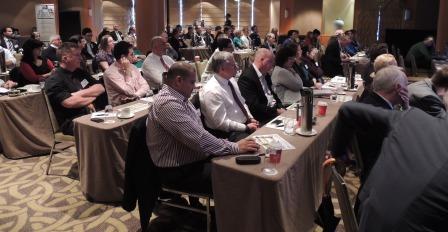
RightClick, back for its fourth year showcased the impact of new technology in the work place and how it has been adopted across government.
Emerging technology offers each of us exciting opportunities to enrich our work and home lives. However, organisations are finding it increasingly challenging to keep up with these new trends.
Technology is a tool for an end. Organisations need to be clear on their goals and select technologies that will best meet them, not select technologies and adjust their goals to suit. RightClick 2012 will showcased examples of both the public and private sector embracing the challenge and opportunities technology has provided. Presenters explored how they have achieved their corporate goals with the appropriate technology.
Topics Included
- Service in the age of the digital citizen
- Information Systems Audit Report
- Database design for longevity
- Harnessing technology to enhance the citizen experience
- Big Data: harnessing big data to achieve unprecedented insights for service improvement and policy development
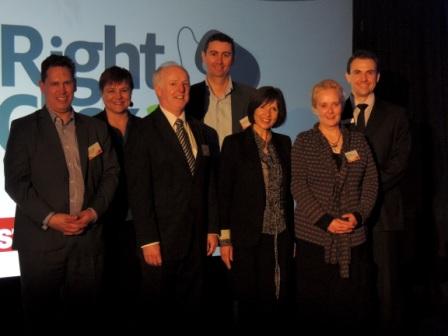
Presenters
Supported By:


The Shiny New Thing: Why We’re Attracted to the Latest and Greatest
Craig Thomler
Managing Director
Delib Australia
Craig Thomler is one of Australia’s leading Government 2.0 advocates and practitioners and recently joined Delib as Managing Director. With a degree in Marketing and a background in the consumer goods industry, he has over fifteen years experience working in the online sector. As an entrepreneur he has founded and held senior roles at a number of early-stage technology companies in Australia and overseas.
Since 2006 he has worked in the Australian Public Service, where he developed his interest in improving public governance through strategic and innovative use of digital technologies.
In 2009 Craig was awarded the inaugural Government 2.0 Individual Innovator Award by the Australian Government. He was recently named by PoliticsOnline as one of the 2010 winners of the prestigious international award, ‘The Top 10 Who are Changing the World of Internet and Politics’. He speaks regularly at events within Australia and overseas about Government 2.0 strategy and practice.
ABSTRACT: The Shiny New Thing’: Why We’re Attracted to the Latest and Greatest
Craig will explore the psychology behind why some people are attracted to ‘shiny new toys’, and the decision process involved. He will provide insight into strategies for managing this tendency when engaged in projects that involve technology (specifically considering social media and other online tools) and provide examples of how it is applied across government to achieve organisational goals.

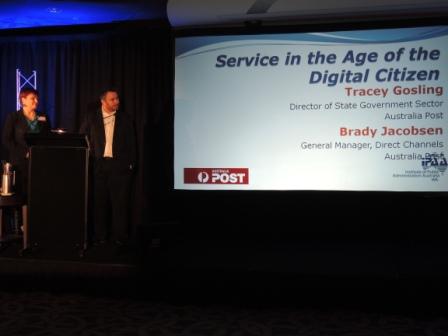
Service in the Age of the Digital Citizen
Joint Presentation
Tracey Gosling
Director of State Government Sector
Australia Post
In Jan 2011, Tracey joined Australia Post to lead a national team responsible for delivery of State Government services such as bill payments, applications processing, identity checking, postal, courier and communications to the public. Over the last 20 years Tracey has worked for various Accounting firms, global IT supplier EDS, Telstra and now Australia Post to deliver complex transformation programs within the Public Sector such as High Tech Court Systems, Critical infrastructure replacement, integrated supply chain portals, emergency management collaboration systems and hospital patient systems. In addition Tracey has served on a State Disaster Council sub-committee and Critical Infrastructure Group.
Tracey is also a volunteer for Youngcare – an organisation dedicated to serving the needs of young people with high care disabilities both in home and building specialist facilities. More than 6,500 young people are currently located in aged care homes.
ABSTRACT: Service in the Age of the Digital Citizen
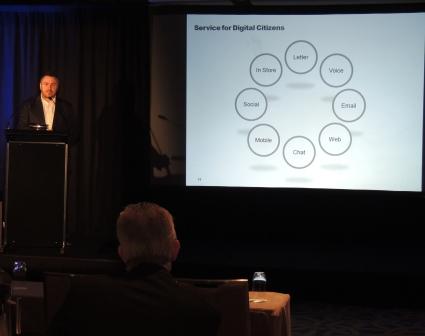
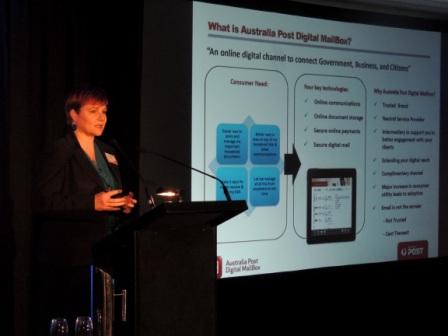
Brady and Tracey will be presenting some of the Australia Post digital assets critical to their strategy, including the Australia Post Digital Mailbox and iPhone application. Some of the key ideas they will explore include;
- Transforming a ‘face-to-face’ government service provider into a multi-channel operator. The learning’s of Australia Post as a government-owned entity.
- Doubling the volume of online transactions using channel migration – does it really work for releasing frontline resources?
- Fast-tracking service responses whilst maintaining accountability.
- Culture can be a huge inhibitor as well as capital based projects, how did Australia Post manage this as a government entity.

Brady Jacobsen
General Manager, Direct Channels
Australia Post
Australia Post has been on a 12 months journey transforming the way customers interact with this iconic organisation. With over 2M customers visiting them online each month, and with more than 5 million voice conversations every year Australia Post are creating a true multichannel contact centre environment across their Sales and Customer Care functions for this iconic organisation.
Some highlights of this business in the last 12 months include Consolidation and technical refresh of its contact centres and digital channels, deployment of new channels to market for iPhone and Windows7, enabling FAQ and email capability, commencing customer management in places like Twitter and Facebook.
Prior to joining Australia Post Brady worked in various divisions of Telstra including Media, Internet, Consumer and Marketing. As Director of Customer Operations in Telstra’s Internet and Media division “BigPond” Brady led a transformation effort which included the establishment of social media channels, transition from customer care to sales, and the sales of mobile content and SAS through traditional channels like contact centres.

File Type Not Found: Locking Your Data Up In Databases
Meg Travers
Digital Archive Support Manager
State Records Office of WA
Meg has been working in IT for over 15 years, the last 8 years with the state’s major collecting institutions. Specialising in digital preservation, she currently works at the State Records Office of Western Australia managing their digital archive program.
ABSTRACT: File Type Not Found – Locking Your Data Up in Databases
Digital preservation faces problems of media decay and obsolescence, and file format obsolescence. Whilst we can fairly easily tackle the problems with storage media by refreshing it regularly, file formats often require intervention to remain in an accessible format.
Many organisations are conscious of ensuring that the “documents” in their recordkeeping systems are migrated or put into open formats, but what of the data in database systems? What kind of data is in these systems, how important is it to the future, and what might be lost if it becomes inaccessible?
This presentation will look at existing content in the Western Australian Government archives, how it is currently created and kept in the digital world, and the issues in creating a usable digital archive for the future.

Agencies Online: Lessons To Be Learned
Colin Murphy
Auditor General
Office of the Auditor General
Colin has extensive experience in finance and administration in both State and Commonwealth Government roles. He has held senior positions within the State Government in the Departments of Justice, Treasury and Finance, Land Administration and the Building Management Authority.
Colin is a member of the Australian Auditing and Assurance Standards Board and holds a Bachelor of Commerce degree from the University of Western Australia. He is a Fellow, former Board member and Past State President of CPA Australia and a Fellow member of Chartered Secretaries Australia and the Institute of Chartered Accountants in Australia. Colin was awarded the Public Service Medal in the 2010 Australia Day Honours.
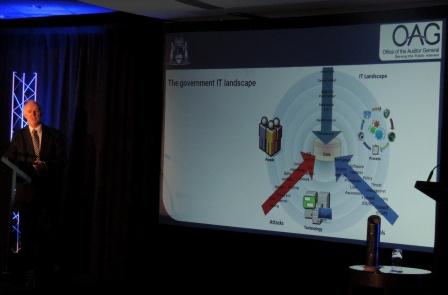
ABSTRACT: Agencies Online: The Lessons To Be Learned
The Office of the Auditor General is a leader in investigating and testing the strength and veracity of government information systems in Western Australia. Technology continues to present opportunities for government to provide a range of services with greater ease, but these opportunities can result in a number of challenges and risks. The Auditor General’s four part Information Systems Audit Report 2012, tested agencies across a number of areas and validates that agencies are yet to understand the risks and controls required to effectively manage their computer environments. Agencies require a greater appreciation of the risk landscape to respond to cyber threats and manage critical applications… All agencies can learn from these examples.

Big Data: Creating Unparalleled Insights to Improve Service and Policy
David Merceron
Executive Director
Ernst & Young Australia
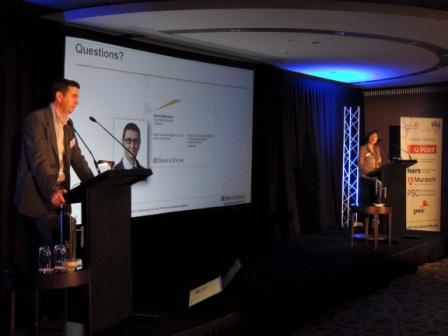
David Merceron is an Executive Director at Ernst & Young Advisory with more than 17 years consulting experience. David’s focus is on technology-enabled business transformation, including IT strategies, governance and architecture work. He assists clients with the alignment of their IT function to business strategies. David is also particularly interested in emerging technologies and innovation as transformation levers, with extensive expertise in cloud computing, social technologies, digital, mobility, big-data, location-based services and innovation management.
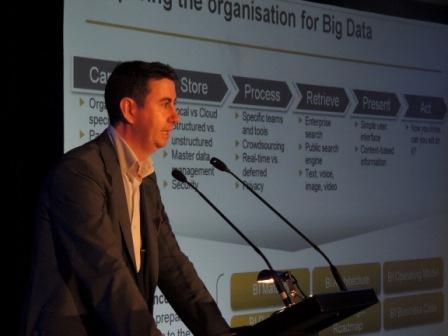
ABSTRACT: Big Data: Creating Unparalleled Insights to Improve Service and Policy
The amount of data collected by Government agencies doubles every two years and with the emergence of smart ‘anytime, anywhere’ devices such as smart meters, phones, health tele-monitoring, the rate of information collection will only continue to accelerate.
Furthermore, there is gold hidden in this data – for whoever is able to make sense out of it. More than ever, governments have the opportunity to leverage this data for service improvement and policy development, but this comes with its own set of challenges, including:
- Governments are under more pressure to deliver more for less
- Citizens have as much if not more information available via search engines and social networks, and are more demanding as well as more keen to take part in service delivery
- The extreme scale of this ‘big data’ will force government to find new ways to capture, store and process the data and will need to be highly innovative.
During our presentation we will address some of the opportunities and challenges that come with ‘Big Data’ and share some innovative examples from organisations that have transitioned successfully.

Digital Revolution: Books to Bytes
Peter Edwards
Client Services Team Leader
State Library of Western Australia
Peter Edwards is a qualified Librarian with over 15 years of industry experience. He has an interest in innovative use of technology in libraries. He has contributed and lead a number of technology based library projects, aligning these with how client services are delivered at the State Library of Western Australia where he currently employed as a Team Leader in the Client Services directorate.
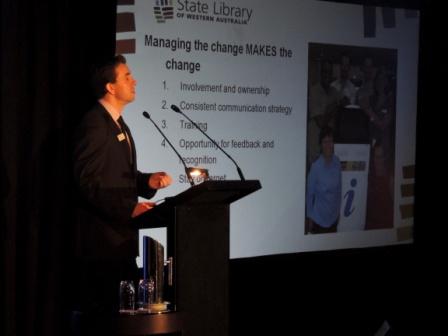
ABSTRACT: Digital Revolution: Books to Bytes
As the digital revolution continues the State Library of Western Australia is rising to the challenge of meeting the increasing expectations of its informed clientele. Clients now have increased sophistication in the way they use technology and expect it to be fast, mobile, functional as well as entertaining and informative. To meet these expectations, the Library has introduced new ways of assisting clients. These include a free wifi internet service available on a 24/7 basis. In addition, staff are deployed with mobile devices allowing them to move around the library away from desks and proactively take the service to in-Library clients. There is also wide range of e-resources, including an e-book library, available to open up a world of information to Library clients much of which may be accessed beyond the Library’s walls. Finally, the Library developed and deployed a touch screen information kiosk service where clients can self direct to Library services and equipment.
These services are in response to the way the digital revolution has evolved the way we meet our clients’ expectations needs as well as wants. Thoughtful planning and change management is needed to ensure that all clients, internal and external, are able to thrive in an ever changing technological environment. It is an exciting time to be in the Library and information industry; old school service constraints are being challenged and, where possible, removed or adapted as we continue to provide all Western Australians with a State Library service that continues to be relevant to their needs and expectations.

Related Resources
